I’ve been around online business long enough to remember launching e-commerce sites back when Kogan and a lot of the others were just starting out. Back then, plenty of business owners were nervous about selling online. It felt new, a bit risky, and easy to put in the “too hard” basket.
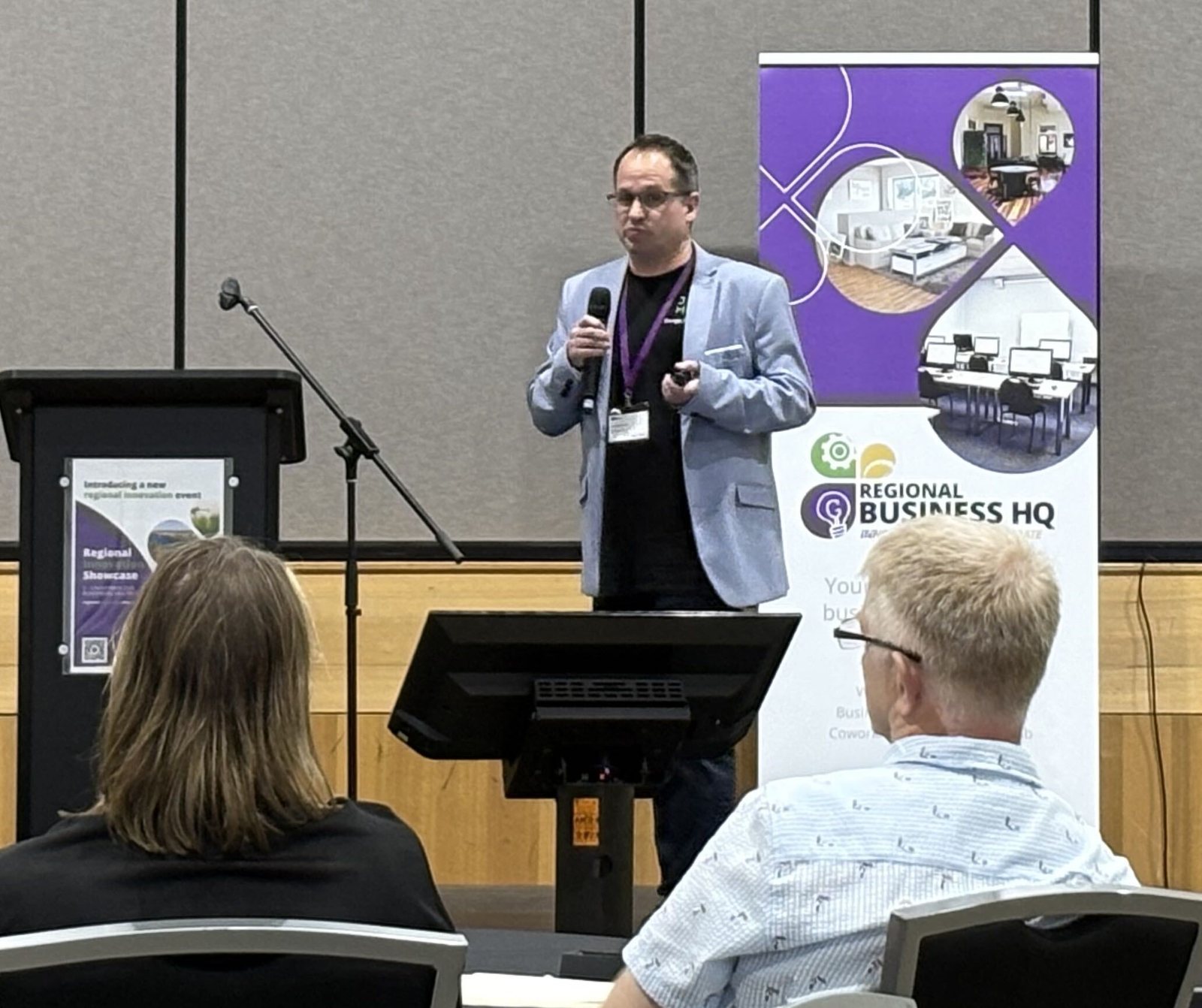
Today I stood up in front of a room of business owners in Bundaberg to talk about using AI in your business, and I couldn’t help thinking it feels a lot like those early days.
One of the things I shared on the day was the gap between metro and regional businesses using AI. The federal government’s National AI Plan found only 29% of regional organisations are adopting AI, compared with 40% in metropolitan areas. That’s an 11-point gap. From what I see, it isn’t about regional businesses being less capable. It mostly comes down to fear of the unknown.
So here’s what I told the room, in plain English.

A bit about where I’m coming from
I’ve been in business for more than 20 years. For the last 15 I’ve run JR Marketing Group, a digital marketing agency, and for the last 10 or 11 of those we’ve been based in Hervey Bay. We’re now a team of 15+, and we’ve helped more than 500 businesses with their marketing, including more than 250 dental clinics.
I also completed studies in AI and digital transformation at Stanford, and I’m a mentor with Mentoring for Growth. AI is a big part of how we work now, and it’s a big part of the conversations I have with business owners.
Treat AI like a new intern, not an expert
This is the biggest mindset shift. AI isn’t an expert you can hand the keys to. It’s more like a new intern. Keen, quick and helpful, but it needs a good brief, and you need to check its work.
One line I used on the day was this: “AI makes dumb people think they are smart.” What I mean is that AI sounds so sure of itself that people trust it blindly. They take whatever it spits out and send it, without checking whether it’s right or whether it even sounds like them. The problem isn’t the tool. It’s the blind trust.
So with any intern, you brief it well, you check its facts, and you check its tone. And remember, you’re still accountable for everything that goes out under your name.
Generic input, generic output
The more context you give AI, the better the output. If you type in one vague line, you’ll get a vague, generic answer back. That’s not AI being bad. That’s a bad brief.
The framework I use is four parts: Role, Context, Task and Format.
- Role: tell it who it is. For example, “You’re the owner of a family-run cafe in Bundaberg.”
- Context: give it the background. Links, brand info, the tone you use.
- Task: be specific about what you want done.
- Format: spell out the length, how many emojis, and the structure.
Leave any one of the four out and the result gets noticeably more generic, fast.
A worked example: replying to a Google review
Here’s how that might look for a cafe owner replying to a Google review. Say a customer has left three stars because their coffee took too long on a busy Saturday morning. Instead of typing “write a reply to this review”, you’d write something like this:
Role: You’re the owner of a family-run cafe in Bundaberg.
Context: Here’s the review a customer left [paste review]. We’re friendly and down to earth, and we know most of our regulars by name. Here’s our website and menu [paste links].
Task: Write a reply that thanks them, owns the issue without making excuses, and invites them back.
Format: Under 80 words, Aussie tone, one emoji, finish with how to find us.
That’s the difference between a reply that sounds like a robot and one that sounds like you. Then you read it, tweak anything that doesn’t sound right, and post it yourself.

Jobs worth handing off to AI
You don’t need to start big. These are the jobs I suggested to the room:
- Google review replies. Responses in your voice that own the issue and invite people back.
- Social post ideas. Content calendars and post concepts when you’re staring at a blank page.
- Quotes and job ads. Give it your rough notes and let it tidy and format them.
- Meeting prep and notes. I use Granola to record and transcribe my meetings, both in person and on Zoom.
- SOPs. Record yourself doing a task, feed it to AI, and get a step-by-step process doc. Then hand it to your team to load into a tool like Asana.
How we use AI inside our agency
I didn’t want to just talk theory, so I shared how we actually do it at JR Marketing Group.
We keep a shared prompt library. When someone writes a prompt that works well, it gets saved so the whole team can reuse it and we get consistent results.
We have one training guide and one AI policy, and every new staff member is onboarded through it.
We’ve also built an “Ask Josh” tool on Claude. It has access to my past emails and answers questions the way I would, so the team isn’t waiting on me for every little thing.
And we enforce four rules:
- Keep private data out. No customer details, no passwords, no sensitive board information.
- Check facts and numbers. If AI doesn’t know something, it will make it up.
- Keep your voice. Review the output before it goes anywhere.
- You’re accountable. “The AI wrote it” is not an excuse.
Your 30-day plan
I finished the talk with a simple plan, because the best way to get over the fear of the unknown is to make it known.
- Pick one task you’ve been putting off.
- Build a brief using Role, Context, Task and Format.
- Show a team member how to do it, then let them run it.
- Measure the time you save.
- Repeat, and expand from there.
That’s it. One task, one brief, one month. Regional businesses don’t need to wait for anyone to close that gap. We can close it ourselves, one job at a time.
Want a hand getting started?
If you were in the room today, thanks for having me. And if you’d like help working out where AI fits in your business, email me at Josh@jrmg.com.au or get in touch here.