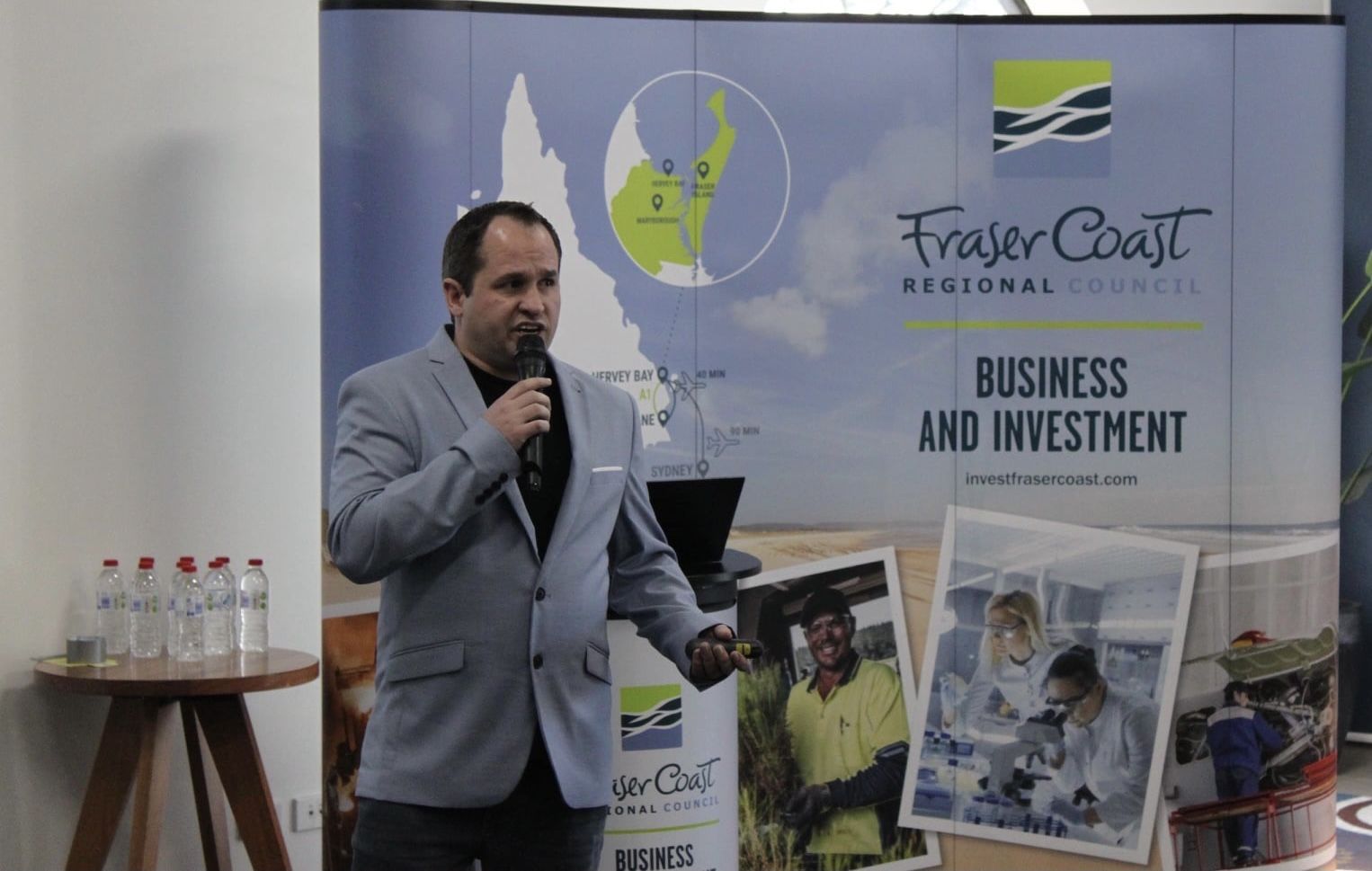
This week I’m meeting with the Hervey Bay state member and the Minister for Small and Family Business. I wasn’t sure I’d get the chance to say everything I wanted to, so I did what I do best and put it in writing. This is an open letter to Minister Steve Minnikin.
I’ve also put together a media release to go with the letter, if you’d like a shorter version to share.
25 November 2026
The Honourable Steve Minnikin MP
Minister for Customer Services and Open Data
Minister for Small and Family Business
Queensland Government
Dear Minister Minnikin,
Thank you for taking the time to meet with me. I wanted to put some thoughts in writing, not because I believe I have all the answers, but because I believe we need to start asking some harder questions about the future of small business in Queensland.
I’m writing as someone who owns a business, employs people, works with business owners across multiple industries and volunteers as a mentor through the Queensland Government’s Mentoring for Growth program. I also know firsthand that the reality of owning a business can be very different from the picture we often present to the public.
In short, I’d encourage three practical steps: listen differently, measure outcomes rather than activity, and find the small changes that can make a big difference. I’d also welcome the opportunity to help facilitate regional conversations in the Fraser Coast or Bundaberg.
Are we genuinely supporting small business?
We celebrate entrepreneurship. We encourage people to start businesses and recognise success through awards, events and media announcements. But I wonder whether we’re spending enough time talking about what happens when the excitement of starting a business is replaced by the pressure of keeping one alive. Are we genuinely supporting small businesses, or are we just getting better at talking about supporting them?
I recognise that the Queensland Government has introduced initiatives to help small and family businesses, and that many people are working hard to deliver them. But we need to look beyond the announcements, funding commitments and workshop attendance, and ask what difference these initiatives are making to the owner who is struggling to make payroll; to the business whose costs have risen but can’t pass them on to customers already struggling with the cost of living; and to the owner who has never applied for a grant or contacted a support service because they’re simply too busy trying to survive.
Are we reaching these people? And perhaps more importantly, how would we know if we weren’t?
Resilience is essential to entrepreneurship. But there is a difference between helping someone become more resilient and continually expecting them to absorb pressures beyond their control. I don’t believe government can or should protect every business from failure, but we should ask whether the environment we’re creating lets well-run businesses stay viable in the first place. When did surviving become the measure of success for so many business owners?
Increasingly, the conversations I hear aren’t about expansion, innovation or new opportunities. They’re about cash flow, rising costs, staffing pressures, and uncertainty: whether owners can afford to keep the people they already have, and whether the business is still worth the personal sacrifice. That last question concerns me enormously. When a business owner starts asking it, we should be listening.
The hidden human cost of business ownership
I’ve been open about my own mental health challenges, and I know that running a business can place enormous pressure on someone’s wellbeing. There are business owners who lie awake worrying about how they’ll pay their employees, who put their staff, customers and families ahead of themselves, and who feel they can’t admit they’re struggling because everyone around them depends on them being strong.
We rightly talk about the importance of mentally healthy workplaces. But who is checking on the employer? I acknowledge that Queensland has wellbeing and financial counselling initiatives for eligible small business owners. But having support available and ensuring people feel able to access it are two very different things. We need to normalise these conversations and make early intervention part of how we support business owners, rather than something that only happens when they reach breaking point.
Shopping local is important, but it isn’t a solution to everything
I recently questioned the effectiveness of campaigns encouraging people to shop locally. Not because I disagree with supporting local businesses; my own business has grown through the support of our community. But a family struggling with the cost of living can’t always afford to pay more simply because a business is locally owned, and a business facing rising expenses can’t solve those problems through another promotional campaign. We need to be careful not to shift responsibility for business survival onto consumers who are under pressure themselves. Supporting small business should also mean making it easier for those businesses to operate.
Regional Queensland needs to be part of the conversation
Living and working on the Fraser Coast has shown me the extra challenges regional businesses face: access to skilled staff, freight and supply costs, smaller markets and limited access to specialist services. But are we hearing from a genuinely representative cross-section of regional business owners, or mainly from those with the time, resources and confidence to take part in formal consultations? Some of the people who most need to be heard are the least likely to attend a business forum. Not because they don’t care, but because they’re too busy running their businesses.
Three practical steps
Many of these pressures, such as interest rates, inflation and federal taxation, are not matters a Queensland Minister can simply resolve. But that doesn’t mean we can’t make meaningful changes at a state level.
- Listen differently. Create structured, direct conversations with regional business owners, including those not already involved in associations or government programs, that identify specific barriers and result in documented actions. Not another presentation or networking event. I’d welcome the opportunity to help facilitate one in the Fraser Coast or Bundaberg.
- Measure outcomes, not just activity. Rather than counting programs delivered, funding allocated or participants, ask what actually changes. Are businesses spending less time navigating government requirements? Accessing support earlier? Facing fewer avoidable administrative burdens? Let’s identify meaningful measures, publish progress, and be prepared to change approach when something isn’t working.
- Find the small changes that can make a big difference. Not every solution needs to be a multimillion-dollar announcement. Sometimes it’s simplifying an application, removing a duplicated reporting requirement, making it easier to reach the right person in government, or reviewing a state-controlled cost or regulation that places a disproportionate burden on smaller businesses. I’d welcome a practical review of these everyday frustrations, with a commitment to implementing achievable improvements.
Sometimes the most meaningful change isn’t the one that generates the biggest headline. It’s the one that makes someone’s day a little easier.
One final thought
Minister, I don’t expect you to agree with everything I’ve written, or for one meeting or one letter to solve the challenges facing Queensland’s small businesses. But I do hope it encourages a conversation about what meaningful support really looks like.
Behind every small business is a person. Someone who took a risk, who may have put their family’s financial security on the line, and who is doing their best to create opportunities for others. And sometimes, someone who is quietly struggling while everyone around them assumes they’re doing fine.
We regularly describe small businesses as the backbone of our economy. But if they are, shouldn’t we be asking how much pressure that backbone can take before it starts to break?
I’m not asking for businesses to be guaranteed success. I’m asking that we give them a fair opportunity to achieve it. And I’m not asking for another announcement about the importance of small business. I’m asking how we can turn that recognition into changes business owners can actually feel. I’d welcome the opportunity to contribute to that work, whether through further discussions, facilitating regional engagement or helping identify practical improvements.
We might not be able to change everything. But that’s no reason not to change something.
Thank you for your time and consideration.
Kind regards,
Josh Rimmington
Founder & Director, JR Marketing Group
Volunteer Mentor, Queensland Government Mentoring for Growth Program
Author | Speaker | Business Owner
www.jrmg.com.au