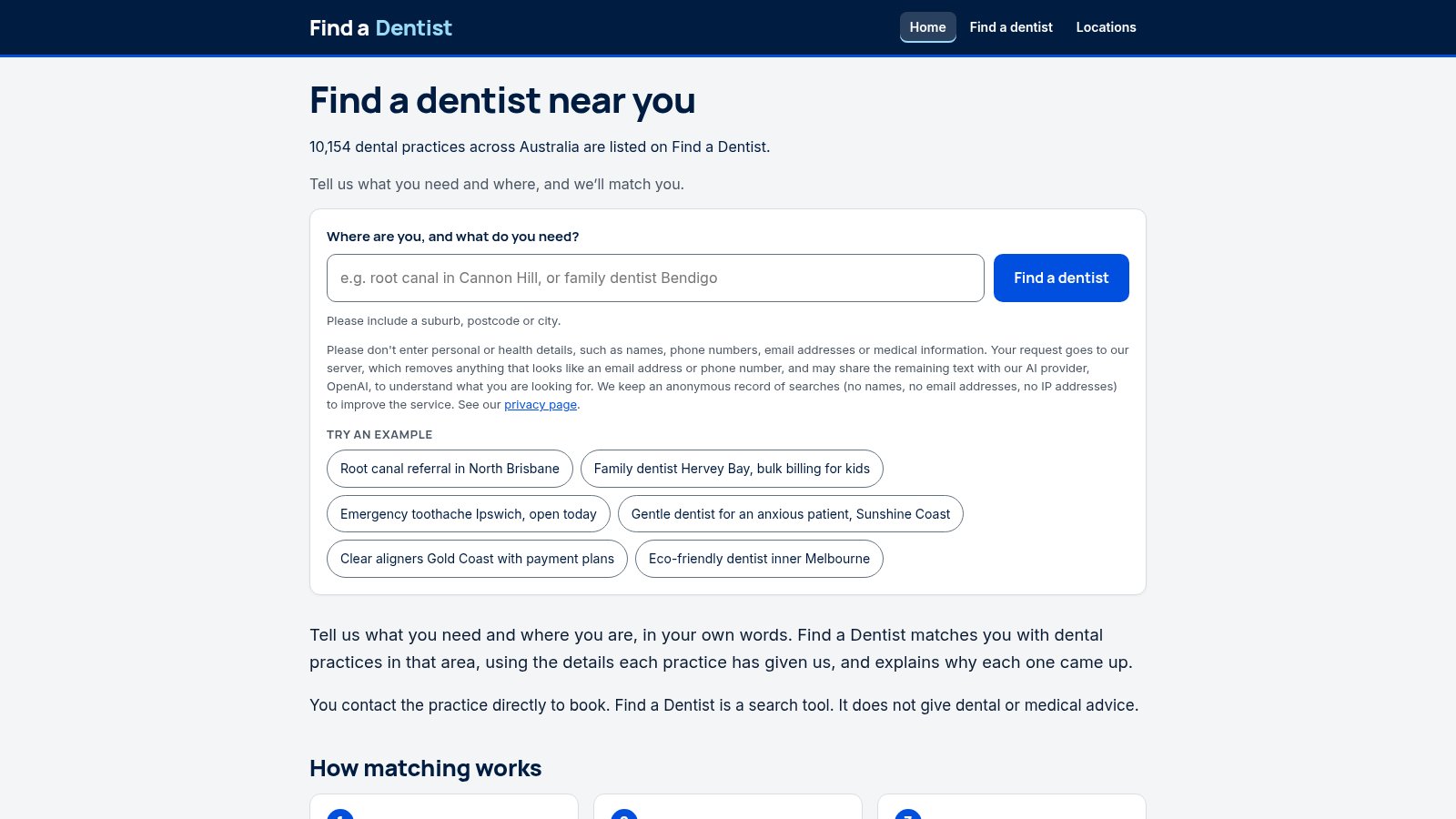
“Check-up for my child near Parramatta.” “Chipped tooth.” “Anxious patient, Saturday appointment, Geelong.”
That’s how real people describe what they need from a dentist. Not “paediatric preventive care” or “restorative dentistry”. Just plain words, typed in a hurry, often with a sore tooth or a worried kid in the background.
I’ve spent a long time watching how people search for dentists, and that gap between how practices describe themselves and how patients describe what they need is a big part of why I built Find a Dentist. This week it went live nationally, and Bite Magazine covered the launch in New free national dentists directory launches (9 November 2026).
People don’t search in clinical terms
As I said to Bite: “Most people don’t search for a dentist using clinical terms. They search for ‘someone who’s good with children’ or ‘somewhere open on Saturday near me’.”
It sounds obvious when you say it out loud. But most directories and a lot of practice websites still expect people to know the right words. If you don’t know what the treatment is called, or which category to click, you end up scrolling through long lists and guessing.
Through JR Marketing Group I’ve worked with more than 250 dental clinics, and I’ve seen the other side of this too. Great practices, with exactly what someone is looking for, simply don’t come up because the person searching used everyday language. I wrote about how much of a practice’s new patient flow starts with search in where new dental patients really come from. Find a Dentist is my attempt to make that moment work better for everyone.
What Find a Dentist actually does
It’s a free national directory listing more than 10,000 dental practices across every state and territory. Instead of picking from menus, you describe what you need and where you are, in your own words.
The AI-assisted search turns that request into the things that matter: the type of care, the suburb, town or postcode, opening days and languages. It then compares that with the information each practice has provided.
A couple of things I was really keen on:
- Every result explains why it matched. In plain English, so you’re not left wondering why a practice came up.
- Distances are shown in kilometres. Small thing, but it matters when you’re choosing between two suburbs.
- You contact the practice directly. By phone, website, booking link or email, so you can confirm anything that matters to you before you book.
It’s a search tool. It doesn’t give dental or medical advice, and for anything urgent the site points people to 000 or healthdirect.
No bookings, no patient details
This one was non-negotiable for me. Find a Dentist doesn’t take bookings, doesn’t collect patient details and doesn’t pass anyone’s information on to practices.
In my words to Bite: “We built Find a Dentist so Australians can say what they need in plain words and see which local practices match, and why, then contact the practice directly. It’s free to use, and we don’t collect or pass on anyone’s details.”
After 20+ years in business, I’ve learnt that trust is the whole game, especially in healthcare. If people have to hand over their details just to see a list of dentists, you’ve lost them before you’ve started.
Being upfront about Premium listings
Some practices pay for a Premium listing, and I’d rather be upfront about that than pretend otherwise.
Here’s how it works. Premium listings are clearly labelled “Premium”. They only appear when they’re a relevant match for the search, sitting above the other matching results, which are ordered by how well they fit. In searches that sound like an emergency, a Premium practice is only shown if it actually offers emergency care. And a practice that isn’t a relevant match is never shown just because it pays.
The full approach is published at findadentist.com.au/how-results-are-ranked, so anyone can check it.
In the interest of the same transparency: Find a Dentist is operated by JR Marketing Group, and some listed practices are clients of JR Marketing Group.
Why this matters for practices
If you run a dental practice, the lesson here goes beyond one directory. Patients describe their needs in everyday language, and the practices that do well are the ones that make it easy to see they’re a match. Good with kids? Open Saturdays? Gentle with nervous patients? Say so, clearly, everywhere you show up online.
And remember that being found is only the start. As I wrote after a recent dental panel, marketing doesn’t fix a bad patient experience. The search gets them to your door; the experience is what keeps them.
Claim your free listing
If you’re a dental practice owner or manager, check your listing is right. You can claim and correct your free listing, or apply for Premium, at findadentist.com.au/dentists. The better your details, the better the search can match you with the people who need you.
And if you’d like help with the bigger picture, whether that’s your strategic marketing plan, an audit of what’s working and what’s not, or getting more from AI in your practice, I’d love to chat. Request a discovery call.